



The Small Business Guide to Launching & Growing an Online Brand in Maryland
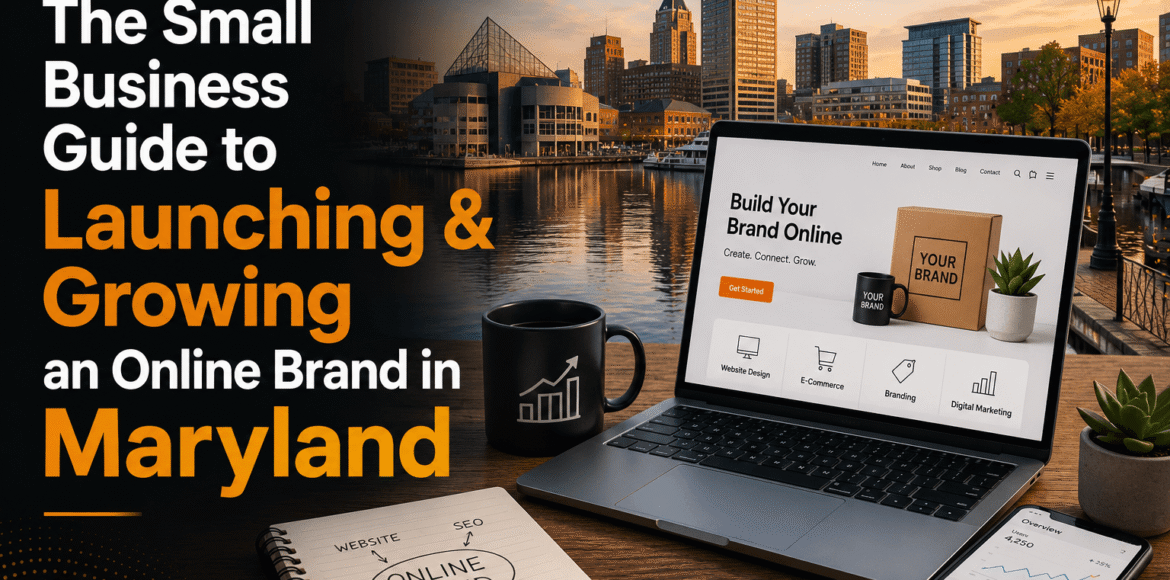
Building a dominant online brand in the Old Line State requires more than a basic web template. For small businesses stretching from Baltimore to Annapolis, digital real estate has become fiercely competitive. To capture high-intent local traffic, small business owners must synchronize fast architecture, targeted customer acquisition platforms, and localized user engagement funnels. This authoritative guide lays down the exact engineering framework required to launch, optimize, and scale an enterprise-level digital footprint locally.
Phase 1: Architectural Foundation via Professional Web Design
A business website serves as the single source of truth for your brand. Many startups compromise by deploying generic, unoptimized templates that suffer from code bloat, slow rendering pipelines, and fragmented interface frameworks.
Why Custom Structure Defeats Pre-Made Templates
Custom development ensures your codebase is lightweight, secure, and semantic. When building an interface, clean semantic HTML allows search engine web crawlers to efficiently parse, index, and contextualize your business offers without getting trapped in excessive JavaScript execution loops. Partnering with an expert web design company Maryland changes your web setup from a passive digital brochure into a highly optimized lead generation machine.
[Clean Code Layer] ──> [Fast DOM Generation] ──> [Improved Search Visibility]
Mobile-First Engineering Realities
With more than 60% of search traffic originating from mobile screen viewports, mobile-responsive engineering is non-negotiable. Responsive engineering uses CSS media queries to dynamically rearrange content grids based on user screen sizes. This eliminates text clipping, broken UI loops, and distorted button layouts, ensuring fluid navigation for users searching for local services on the move.
Phase 2: Visibility Engineering Through Local SEO Services
A beautiful website yields zero economic returns if your target demographics cannot find it on search engines. Visibility engineering requires a deep technical understanding of search algorithms and user localization mechanics.
Maximizing the Google Local Map Pack Hierarchy
To secure positions inside the local map pack, a business must achieve absolute consistency in its data parameters. This requires a uniform name, address, and phone number (NAP) profile across all primary web indexes. Conflicting contact strings confuse algorithmic crawlers, eroding local algorithmic trust scores. Utilizing specialized seo services allows businesses to deploy verified Schema markup script injections, anchoring their physical office locations directly into Google’s local knowledge graph mapping.
┌────────────────────────────────────────────────────────┐
│ UNIFORM LOCAL DATA PARSING │
├───────────────────────────┬────────────────────────────┤
│ Verified Google Profile │ Exact Matching Site Header │
│ Same Physical Address │ Identical Phone Link Strings│
└───────────────────────────┴────────────────────────────┘
On-Page Optimization Architecture
On-page visibility relies on a highly calculated hierarchy of content markers. Your primary H1 must feature geo-modified phrases, while secondary H2 and H3 elements structure the logical flow of the body copy. Integrating high-volume semantic variations within context blocks allows your page assets to rank for long-tail informational queries without triggering keyword density spam penalties.
Phase 3: Traffic Generation with Multi-Channel Marketing
Once your website architecture is stable and indexed, you must turn on consistent, multi-channel customer acquisition funnels.
Accelerating Traffic via Pay-Per-Click Performance Campaigns
While organic authority takes time to mature, pay-per-click (PPC) advertising offers immediate visibility at the top of search result pages. Highly targeted local ad copy backed by conversion-focused landing configurations captures active buyers precisely at their moment of maximum purchase intent. Deploying structured negative keyword groups prevents budget bleed on irrelevant searches, keeping your customer acquisition cost (CAC) lean.
Organic Brand Scaling via Social Media Channels
Social media channels operate as excellent brand amplification layers. Regularly sharing authoritative case studies, portfolio updates, and business milestones builds social proof. This continuous user engagement funnels qualified contextual traffic back to your core website, signaling strong domain brand authority to major search networks.
Phase 4: Conversion Rate Optimization (CRO) Frameworks
Traffic without conversion is a waste of marketing spend. Conversion engineering analyzes user interaction behaviors to remove points of friction across the transaction path.
[User Land] ──> [Clear Value Proposition] ──> [Simplified Contact Field] ──> [Lead Generation]
Stripping Conversion Friction Patterns
Many agency setups kill conversion metrics by asking for too much data upfront within entry form layouts. For optimal user engagement, minimize input requests to fundamental parameters: First Name, Primary Email, and Phone Number. Ensure form validation scripts run instantly on the client side, preventing annoying page reloads that cause users to abandon the registration funnel.
Dynamic Micro-Interactions and Visual Anchors
Using clean visual anchors guides the visitor’s eyes straight down to your primary Call-to-Action (CTA) targets. High-contrast submission elements combined with explicit trust indicators, such as client portfolio showcases and certified agency reviews, lower consumer resistance. This simple optimization loop transforms casual organic traffic into highly predictable incoming business leads.
Frequently Asked Questions (FAQ)
How long does it take to see results from Local SEO in Maryland?
Typically, structural optimizations and local link updates take 3 to 6 months to mature and rank reliably within local search engines.
Why should I avoid using generic website page templates?
Generic builders feature deep structural nesting and heavy code bloat. This slows down page load performance and hurts your organic rankings.
Should my small business invest in PPC or organic SEO first?
A balanced marketing approach uses hyper-targeted PPC campaigns for instant lead